

Fundamentals of Montessori Education

Wishlist Share

About Course

Fundamentals of Montessori Education
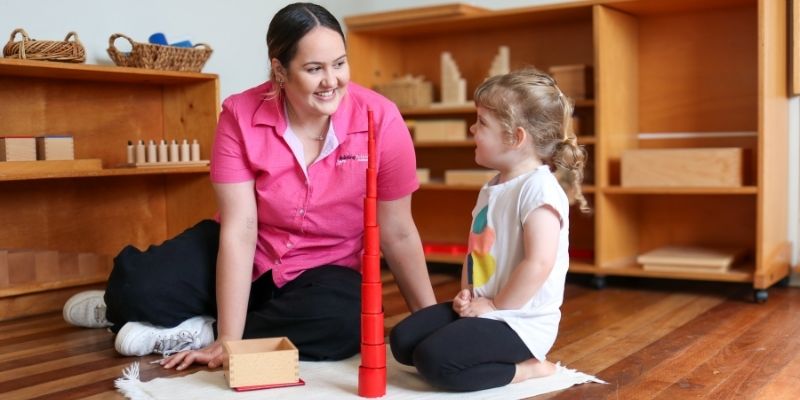
Welcome to the Fundamentals of Montessori Education course! This course provides an insightful introduction to the Montessori teaching method, covering its history, key principles, and five core curriculum areas. Designed for those eager to explore Montessori education without committing to full training, it serves as the perfect starting point for your journey.

Through the following interactive modules, you will gain a foundational understanding of how Montessori fosters independent, hands-on learning. With a flexible, self-paced structure, you can complete the course online or through face-to-face sessions in approximately 8-10 hours. Whether you’re an educator, parent, or simply curious about Montessori, this course will equip you with essential knowledge to better understand and apply its principles. Let’s begin!

Already enrolled in this course? Click on the button below to access your Dashboard. 

Show More

What Will You Learn?

  • The origins of Montessori education and the life of Dr Maria Montessori
  • Key principles such as independence, observation, the prepared environment, and respect for the child
  • The adult’s role as a gentle guide – observing, responding, and creating space for the child’s independence to flourish
  • You’ll also be introduced to the five core areas of the Montessori curriculum, each designed to support different aspects of a child’s growth and development:
  • Practical Life: Activities that help children care for themselves and their environment, building independence, focus, and coordination through real-world tasks like pouring, sweeping, and food preparation.
  • Sensorial: Materials that refine the senses and lay the groundwork for future learning by helping children classify, compare, and explore shape, colour, texture, sound, and dimension.
  • Language: A phonics-based approach that develops spoken language, vocabulary, early writing, and reading through tactile materials and rich verbal experiences.
  • Mathematics: Hands-on tools that help children understand quantity, numerals, operations, and patterns — starting with concrete materials and gradually moving to abstract thinking.
  • Cultural Studies: Exploration of science, geography, history, art, and music that broadens a child’s understanding of the world and their place in it – from land and water forms to life cycles and the solar system.

Course Content

Fundamentals of Montessori Education

  • TOPICS TO BE COVERED DURING THE COURSE
  • WHO IS MARIA MONTESSORI?
  • WHAT IS MONTESSORI?
  • WHO INSPIRED MARIA MONTESSORI?
  • FAMOUS MONTESSORIANS
  • MYTHS ABOUT MONTESSORI 
  •  DIFFERENT STARTING POINTS
  • 8 UNDERPINNING PRINCIPLES OF MONTESSORI

Respect for the Child

The Absorbent Mind

Normalisation

The Prepared Adult

The curriculum areas

The Prepared environment

The Sensitive Periods

Mixed Age Groups